Galaxy Clusters formed Early and Hot

CosmoQuestX
February 12
Galaxy Clusters formed Early and Hot
February 12
It can be really hard to grasp the scale of things in the early universe. When we say “large galaxies” existed earlier than expected, researchers may be talking about things the size of the nearby Small Magellanic Cloud. But for that time, that was noteworthy.
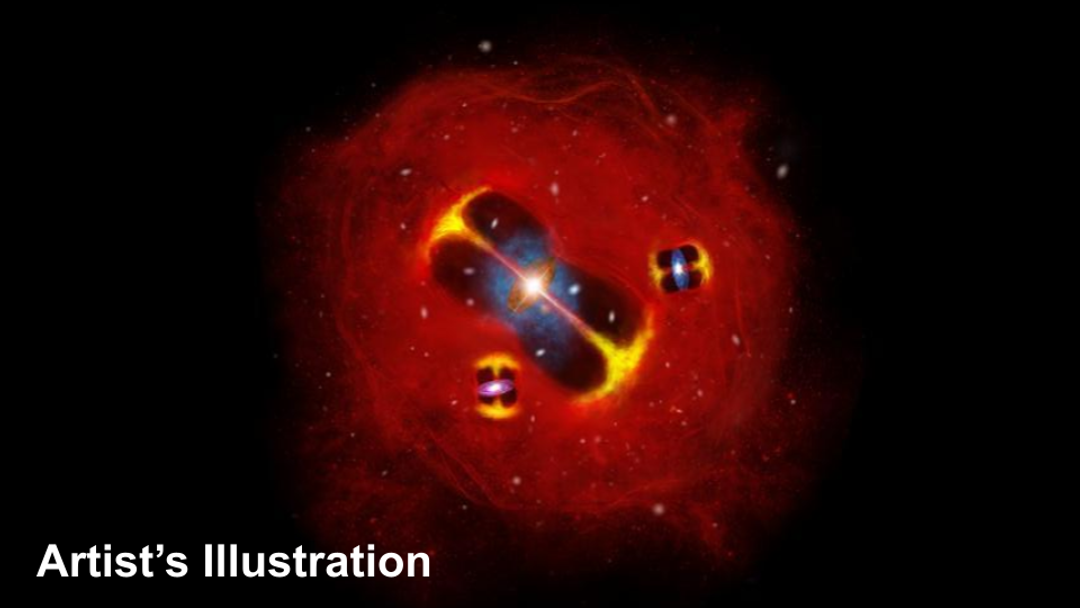
And out of these small early galaxies, small-sized galaxy clusters were also able to form, and they looked nothing like I was expecting. Using the Atacoma Large Millimeter/Submillimeter array, astronomers studied the light of a galaxy cluster shining from when the universe was just 1.4 billion years old. This system contains more than 30 active galaxies in a value similar to the Milky Way galaxy's halo, yet it is forming stars 5000 times faster than our own galaxy. This work indicates galaxy cluster formation was more explosive and faster than previously thought.
More explosive and faster than previously thought… that is the theme - our universe didn’t wait around to go from zero to stars, and from stars to galaxies and galaxy clusters. In just 2 billion years our universe went from nothing to an amazing something rich in structures we would recognize in our modern universe.
And the longer JWST is in orbit, and the more new telescopes we put into action, the more data we’ll have as we rethink how our universe evolved. It isn’t great to learn so many of our theories were just not on point… but being able to see the data… it’s an amazing time to be an astronomer.

Galaxy Clusters formed Early and Hot
CosmoQuestX
February 12
Galaxy Clusters formed Early and Hot
February 12
It can be really hard to grasp the scale of things in the early universe. When we say “large galaxies” existed earlier than expected, researchers may be talking about things the size of the nearby Small Magellanic Cloud. But for that time, that was noteworthy.
And out of these small early galaxies, small-sized galaxy clusters were also able to form, and they looked nothing like I was expecting. Using the Atacoma Large Millimeter/Submillimeter array, astronomers studied the light of a galaxy cluster shining from when the universe was just 1.4 billion years old. This system contains more than 30 active galaxies in a value similar to the Milky Way galaxy's halo, yet it is forming stars 5000 times faster than our own galaxy. This work indicates galaxy cluster formation was more explosive and faster than previously thought.
More explosive and faster than previously thought… that is the theme - our universe didn’t wait around to go from zero to stars, and from stars to galaxies and galaxy clusters. In just 2 billion years our universe went from nothing to an amazing something rich in structures we would recognize in our modern universe.
And the longer JWST is in orbit, and the more new telescopes we put into action, the more data we’ll have as we rethink how our universe evolved. It isn’t great to learn so many of our theories were just not on point… but being able to see the data… it’s an amazing time to be an astronomer.